
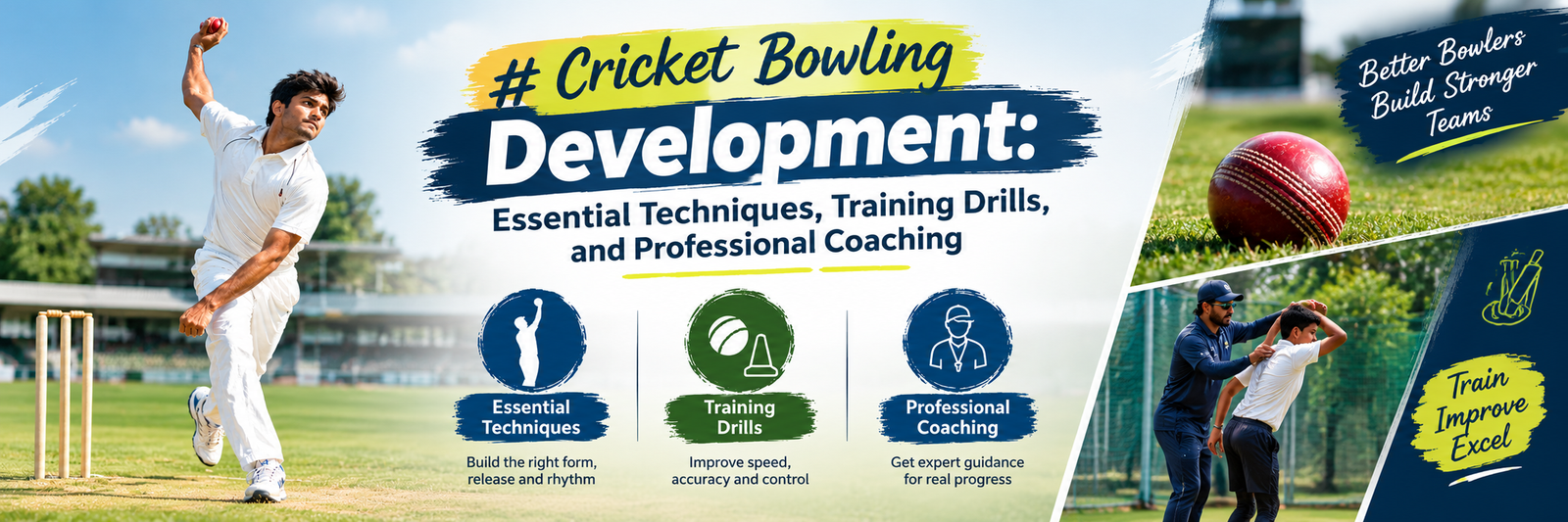
Cricket Bowling Development is an important part of becoming a skilled and confident cricketer. Bowling is not just about delivering the ball towards the batter; it requires the right technique, accuracy, control, fitness, and a clear understanding of the game. Whether a player wants to become a fast bowler or a spin bowler, regular practice and proper guidance can make a significant difference. With structured training and professional coaching, young cricketers can improve their bowling skills, correct common mistakes, and develop the confidence needed to perform well in competitive matches.
Cricket Bowling Development: Building Strong Bowling Skills
Cricket Bowling Development helps players understand the fundamentals of bowling and gradually improve their performance. Every successful bowler starts by learning the basics, including grip, stance, run-up, body balance, and release point. These elements work together to help a bowler deliver the ball with better control and consistency.
For beginners, learning the correct technique is more important than trying to bowl at maximum speed. Developing good habits early can help players avoid unnecessary mistakes and build a strong foundation for future improvement. Experienced players can also benefit from reviewing their technique and identifying areas that need attention.
Bowling development also involves understanding match situations. A bowler needs to know when to focus on accuracy, when to change the pace, and how to plan deliveries according to the batter’s strengths and weaknesses. Combining technical skills with smart decision-making helps players become more effective on the field.
Cricket Bowling Development: Essential Techniques Every Player Should Learn
Cricket Bowling Development begins with mastering a few essential techniques that influence a bowler’s accuracy, rhythm, and overall performance. These fundamentals apply to both fast bowlers and spin bowlers, although the specific techniques may differ.
1. Correct Grip: A comfortable and appropriate grip helps bowlers maintain control over the ball. Fast bowlers generally focus on seam position, while spin bowlers learn finger placement and wrist control to generate turn.
2. Balanced Run-Up: A smooth and controlled run-up helps fast bowlers build momentum without losing balance. The approach should feel natural and consistent rather than rushed.
3. Body Alignment: Proper alignment supports a balanced bowling action and helps players maintain control throughout the delivery. Coaches can assess each player’s technique and recommend adjustments suited to their bowling style.
4. Release Point: Releasing the ball at the right moment helps improve line, length, and direction. Consistent practice allows bowlers to develop a repeatable action.
5. Follow-Through: A balanced follow-through helps players maintain their rhythm after releasing the ball. It should be comfortable and appropriate for the bowler’s individual technique.
Working on these fundamentals during practice sessions allows players to develop a more reliable bowling action and prepare for different match situations.
Cricket Bowling Development: Training Drills to Improve Accuracy and Consistency
Cricket Bowling Development becomes more effective when players follow a structured practice routine. Instead of bowling randomly for long periods, players should focus on specific goals during each training session.
Target Bowling Drill: Place markers in selected areas on the pitch and ask bowlers to land the ball near those targets. This drill helps improve line, length, and accuracy.
Run-Up Consistency Drill: Practise the approach without bowling first. Focus on rhythm, balance, and reaching the delivery stride comfortably. This is particularly useful for fast bowlers.
Line and Length Practice: Choose a particular line and length and attempt to hit the same area repeatedly. Track the results to understand how accuracy improves over time.
Variation Practice: Once the basics are strong, bowlers can practise slower deliveries, cutters, yorkers, or spin variations under a coach’s supervision. Players should learn when and why to use each delivery rather than relying only on variations.
Match-Situation Drills: Simulate different match conditions, such as defending a small total or bowling during the final overs. These exercises encourage players to combine technique with tactical thinking.
Short, focused drills with regular feedback can be more useful than simply increasing the number of deliveries bowled. Players should also allow adequate recovery between sessions.
Cricket Bowling Development: The Role of Professional Coaching
Cricket Bowling Development can progress more effectively when players receive guidance from a qualified cricket coach. It is often difficult for players to identify technical mistakes on their own, especially when those mistakes become part of their regular bowling action.
A coach can observe the run-up, body position, arm movement, release point, and follow-through to identify areas for improvement. Video analysis, where available, can help players understand their technique and see how small adjustments affect their deliveries.
Professional coaching also allows training to be adapted to individual needs. A beginner may need to focus on grip and control, while an experienced bowler may work on variations, tactical planning, and consistency under pressure.
At a cricket academy such as Excellence Sports Academy, structured practice and appropriate coaching can help young players build confidence and develop their skills progressively. The aim should be to support long-term improvement rather than expect immediate results.
Cricket Bowling Development: Fitness, Strength, and Injury Prevention
Cricket Bowling Development is not limited to technical practice. Physical fitness plays an important role in helping bowlers maintain their performance throughout training and matches.
Fast bowlers need suitable strength, mobility, coordination, and endurance to manage the physical demands of their bowling action. Spin bowlers also benefit from good balance, flexibility, and control.
A balanced fitness programme may include age-appropriate strength exercises, mobility work, coordination drills, and general conditioning. Warm-ups before practice and cool-down routines afterwards can also support a sensible training schedule.
Rest and recovery are equally important. Bowling too many deliveries without sufficient recovery may increase the risk of overuse injuries, particularly in young players whose bodies are still developing. Coaches should monitor workloads, encourage proper technique, and adjust training according to each player’s age, fitness, and experience.
Players should never ignore persistent pain or discomfort. Appropriate medical advice and a gradual return to bowling can help protect their long-term development.
Cricket Bowling Development: Common Mistakes and How to Correct Them
Cricket Bowling Development requires patience because players often need time to recognise and correct technical mistakes. Identifying these problems early can make training more productive.
One common mistake is focusing entirely on speed instead of accuracy. Players should first develop control and a repeatable action before attempting to increase pace.
Another issue is an inconsistent run-up. Changes in approach speed or stride length can affect balance and release timing. Practising the same comfortable approach can help improve rhythm.
Some bowlers also try too many variations before mastering their basic deliveries. This can lead to inconsistent results. Learning a reliable stock delivery first provides a stronger foundation for introducing additional skills.
Finally, players sometimes overlook their performance after each session. Keeping a simple training record of accuracy, areas for improvement, and coach feedback can help them measure progress and set realistic goals.
Cricket Bowling Development: Setting Goals for Long-Term Improvement
Cricket Bowling Development works best when players have clear, achievable goals. Instead of trying to improve every aspect of bowling at once, they can select one or two areas to focus on during each training period.
For example, a beginner might aim to improve line and length, while an intermediate bowler might focus on maintaining accuracy during longer spells. More experienced players may work on tactical variations and decision-making under pressure.
Reviewing progress every few weeks can help players understand which methods are working. Coaches can adjust practice plans according to performance, fitness, and upcoming matches.
Consistency matters more than quick results. Regular practice, honest feedback, patience, and a willingness to learn help bowlers build skills that can support their cricketing journey over time.
Conclusion
Cricket Bowling Development is a continuous process that combines sound technique, focused training, physical fitness, professional coaching, and match awareness. From learning the correct grip to improving accuracy and understanding different bowling strategies, every stage contributes to a player’s growth. Young cricketers should focus on building strong fundamentals, practising with a clear purpose, and learning from experienced coaches rather than expecting overnight success. With consistent effort and an appropriate training plan, players can become more confident, disciplined, and effective bowlers. For aspiring cricketers, developing these skills through structured practice at Excellence Sports Academy can be a valuable step towards achieving their sporting goals. Visit our homepage to learn more about our cricket training and academy. Follow us on Instagram to stay updated with our latest training sessions, cricket tips, academy activities, and player development updates.